Digital Transformation Doesn’t Fail Because of Technology. It Fails When People Are Left Behind.
Organisations often talk about digital transformation as though it were primarily a technology project.
New systems.
New platforms.
New applications.
New dashboards.
New AI tools.
But technology is only one part of transformation. The harder part is people.
Because while leaders may be discussing implementation timelines, system capabilities and productivity gains, employees may be sitting in the same room asking very different questions:
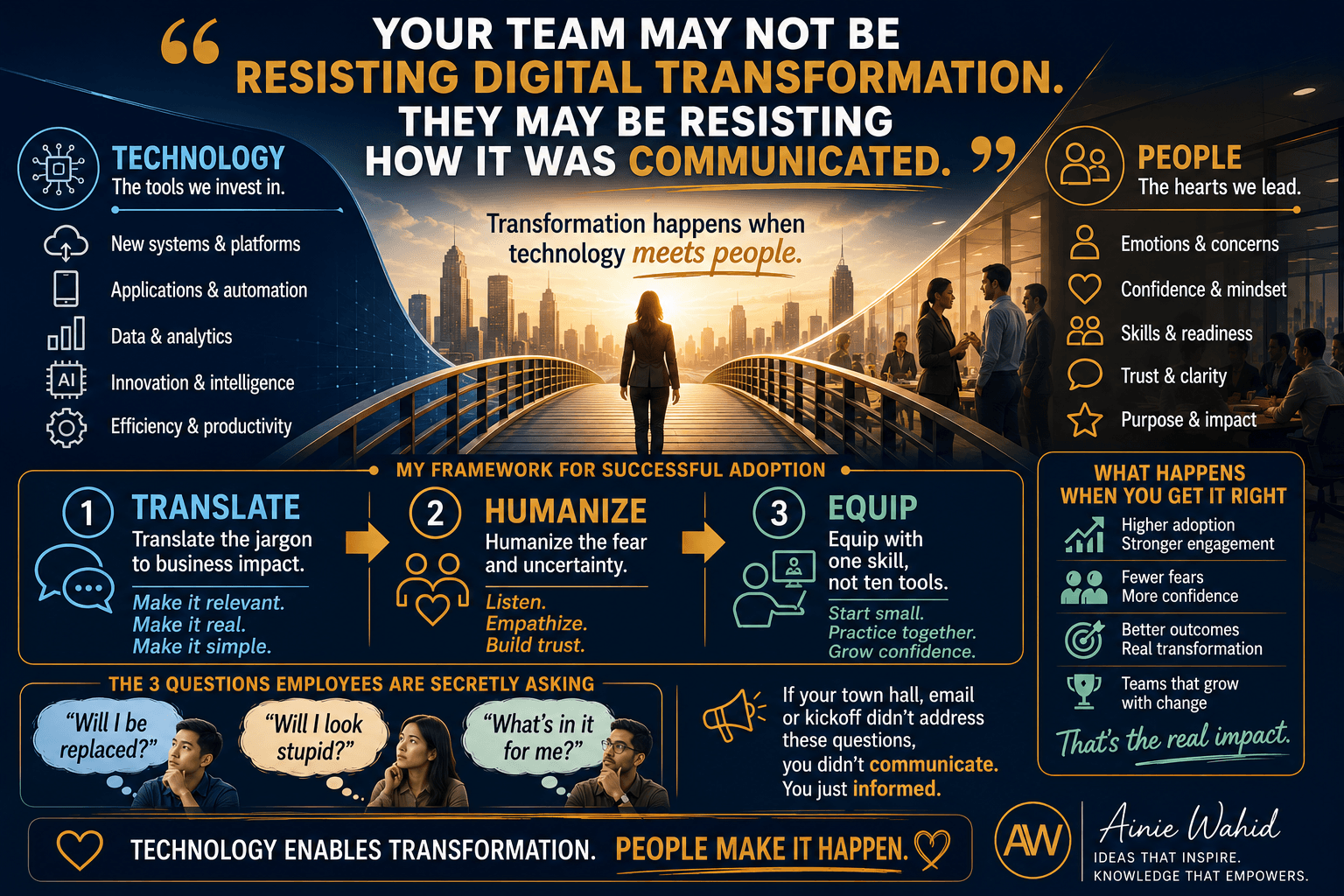
Will this replace me?
What if I don’t know how to use it?
Will everyone else learn faster than I do?
Why are we changing something that already works?
What does this actually mean for my job?
If those questions are never addressed, resistance should not surprise us.
Sometimes what looks like resistance to technology is actually uncertainty about change. And that is where communication becomes part of digital transformation.
Technology needs translation
One of the easiest mistakes to make is explaining new technology using the language of the people implementing it.
Features.
Integrations.
Automation.
Migration.
Analytics.
Architecture.
Those things matter. But the person expected to use the system tomorrow may simply want to know: How will this help me do my job better?
Transformation begins to make sense when technical capability is translated into human relevance.
Instead of: “The new platform will automate several workflow processes.”
Explain: “You will no longer need to manually prepare this report every week.”
Now the technology means something.
Change also needs empathy
People don’t necessarily resist change because they are difficult. Sometimes they are worried.
A new system can quietly challenge someone’s confidence. An experienced employee who has spent twenty years mastering a process can suddenly feel like a beginner again.
That feeling matters. Telling people to “embrace change” doesn’t remove it. Giving them space to learn does.
My approach: Translate. Humanize. Equip.
I believe there are three things leaders can do when introducing technological change.
1. Translate
Turn technical language into practical impact. Explain what is changing, why it matters and how it affects people’s actual work.
2. Humanize
Acknowledge the uncertainty that comes with change. Listen to concerns instead of immediately labelling them resistance. People are far more willing to move forward when they feel heard.
3. Equip
Don’t overwhelm people with ten new tools and expect immediate transformation. Start with the skills they actually need. Give them opportunities to practise. Let confidence grow alongside capability. Because adoption doesn’t happen simply because technology has been installed.
It happens when people become comfortable enough to use it.
Digital transformation is ultimately human transformation
We can purchase sophisticated technology.
We can automate processes.
We can introduce artificial intelligence.
We can redesign entire workflows.
But none of those things creates transformation on its own.
Transformation happens when people understand why change is happening, see how it can help them and feel capable of participating in it.
Perhaps that is why some of the most important conversations in digital transformation aren’t about technology at all.
They’re about trust.
They’re about confidence.
They’re about learning.
They’re about helping people move from: “What is this going to do to me?”,
to: “Show me how I can use this.”
And perhaps that is the leadership gap we sometimes overlook.
Digital transformation doesn’t need more technology explained to people. It needs more people brought into the transformation.